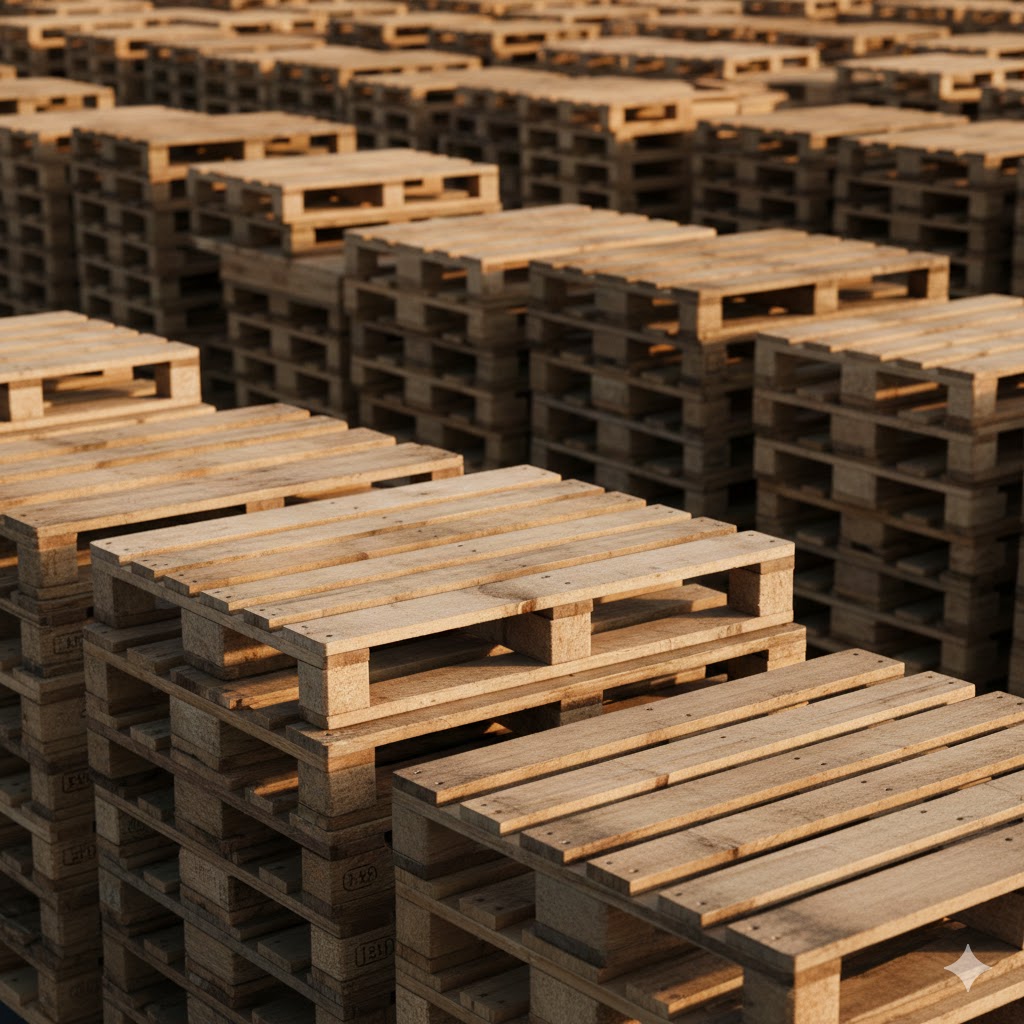
Pallet Sizes & Specifications
Complete guide to recycled pallet dimensions, types, and grades.
Request a Quote
Standard Pallet Sizes
Partner suppliers in our network carry a range of standard pallet sizes, most available as recycled pallets. Custom sizes can also be built using recycled or new lumber.
GMA Pallet (48x40)
Most common in North America. Used in grocery, retail, and general warehousing.
Common industries:
Euro Pallet
European standard size, common in European supply chains and often requested for EU-bound shipments.
Common industries:
Half Pallet
Retail displays, smaller shipments, point-of-sale applications.
Common industries:
Square Pallet
Telecommunications, paint industry, and drum storage.
Common industries:
Automotive Pallet
Automotive industry standard for parts and components.
Common industries:
Drum Pallet
Chemical, pharmaceutical, and beverage drum storage.
Common industries:
Need a custom size? Partner suppliers in our network can build pallets to your specifications, including with recycled lumber.
Learn About Custom PalletsUnderstanding Recycled Pallet Grades
Recycled pallets are sorted into grades by condition. Choose the right grade based on your application and budget.
Premium / Like-New
Appearance:
Clean, minimal wear, no repairs visible
Structural Quality:
Excellent - meets original specs
Best For:
Retail, food, pharmaceutical, customer-facing
Pricing:
Varies with size and quantity - request a quote
Standard / #1
Appearance:
Minor wear, small repairs allowed
Structural Quality:
Good - fully functional
Best For:
Manufacturing, logistics, warehousing
Pricing:
Varies with size and quantity - request a quote
Economy / #2
Appearance:
Visible wear, multiple repairs
Structural Quality:
Sound - functional but worn
Best For:
Construction, storage, internal use
Pricing:
Varies with size and quantity - request a quote
All grades are meant to be structurally functional. Choose based on appearance, load and budget.
Pallet Types & Construction
Stringer Pallets
Most common type. Uses 2x4 or 3x4 stringers running between deck boards. Typically accessed from two sides (two-way entry) or all four sides with notched stringers.
- Cost-effective
- Easy to repair
- Standard design
- Two-way or four-way entry
Stringer pallets are easy to repair and recycle, which keeps them in service longer.
Block Pallets
Uses blocks between top and bottom deck boards. Allows four-way forklift entry from all sides. More durable but typically more expensive.
- Four-way entry
- Higher durability
- Greater load capacity
- Reusable design
Block pallets are durable and often used in pallet pooling systems built around reuse.
Reversible Pallets
Can be used with either side facing up. Features identical top and bottom decks for maximum versatility.
- Dual-sided use
- Extended lifespan
- Versatile applications
- Heavy-duty construction
Either deck can carry the load, which can extend usable life.
Wood Types Comparison
Each wood type is commonly available as recycled pallets, so you can match the pallet to your application while reusing existing wood.
| Wood Type | Advantages | Considerations | Best For | Eco |
|---|---|---|---|---|
| Recycled Softwood | Affordable, lightweight, reused wood, readily available | Less durable than hardwood, susceptible to moisture | Domestic shipping, general warehousing, cost-sensitive applications | ♻️ |
| Recycled Hardwood | Extremely durable, high load capacity, long-lasting | Heavier, more expensive | Heavy loads, export shipping, reusable pool systems | ♻️ |
| Mixed Recycled Wood | Balanced cost and performance, reused wood | Variable appearance | General warehousing, medium-duty applications | ♻️ |
Heat Treatment for Export
For international shipping, wood pallets must be heat treated to ISPM 15 standards. This heat-only process (no chemical fumigants) kills pests and ensures compliance with international phytosanitary regulations.
Heat treatment is available through partner suppliers in our network for most pallet sizes - recycled or new. Treated pallets carry the IPPC stamp for customs compliance.
ISPM 15 heat treatment helps stop pests spreading across borders
How to Choose the Right Pallet
Consider these factors when selecting pallets for your application.
Load Weight
Ensure pallet capacity exceeds your heaviest load, with a safety margin.
Handling Equipment
2-way for hand jacks, 4-way for forklifts from any direction.
Storage Method
Block stacking, racking, or conveyor systems each have requirements.
Industry Standards
Food, pharma, and export have specific compliance requirements.
Frequently Asked Questions
Answers about pallet dimensions, fit, and choosing the right size.
What is the most common pallet size?
The standard GMA 48x40 pallet is most common in North America and fits most racking and trailers.
Do you stock 42x42 or 48x48 pallets?
Partner suppliers in our network commonly carry 42x42 and 48x48 pallets, and other sizes can be sourced on request.
Do you offer Euro or metric pallet sizes?
Euro-size pallets such as 1200x800 and 1200x1000 can be sourced on request.
How do I choose the right pallet size?
Consider your product footprint, racking, handling equipment, and trailer space. Share those details when you request a quote and a supplier can recommend a size.
Can you build custom dimensions?
Yes. Partner suppliers in our network build custom sizes to match your product and handling requirements.
Do different sizes affect load capacity?
Yes. Board thickness, stringer configuration, and deck spacing impact capacity. Share your load weight so a supplier can match the right spec.
Can pallet sizes be heat-treated?
Any size can be heat-treated to ISPM 15 standards for export.
Will custom sizes work with my automation?
Custom builds can adjust dimensions and board spacing to suit conveyors, forklifts, and automated systems. Provide your equipment specs for alignment.
Can you mix pallet sizes in one delivery?
Often, yes. Mixed sizes and grades can usually be delivered in the same load if planned in advance.
Do you provide guidance for weight distribution?
Yes. Partner suppliers can advise on deck board orientation and load placement to protect your products and pallets.
Not Sure Which Pallet You Need?
Tell us about your load and we'll match you with a partner supplier who can help you choose the right pallet size, type, and grade, including recycled options.